

Return to Sender

Can I have a different trial, please? 

Have you ever prayed this way? I have. When I’m in the middle of a difficulty, it’s tempting to look at someone else’s situation. I know their life isn’t perfect, but their trials look more appealing than mine. I want to exchange my trial with the receipt the way I’d return an ill-fitting piece of clothing. 

By the grace of God, that’s not how it works. 

Count it all joy, my brothers, when you meet trials of various kinds, for you know that the testing of your faith produces steadfastness. And let steadfastness have its full effect, that you may be perfect and complete, lacking in nothing.

James 1:2-4 

This is an oft-quoted verse to those experiencing suffering and trials. I memorized it in high school, and sometimes the eyes of my heart would roll. Could I really tell someone with cancer, a woman who lost a child, or a girl who had been abused, to count it all joy? 

I’m thankful the Lord deepened my faith and understanding of these verses. I was a skeptic because I believed that joy is only attainable through good circumstances. This cannot be farther from the truth. 

Joy Amid Suffering

Finding joy in the midst of a trial isn’t our natural inclination. James 1:2-4 commands us to count it all joy when we suffer, but it also gives us the reason for why we can count it all joy. 

For you know that the testing of your faith produces steadfastness.

James 1:3

Steadfastness is a steadiness, grit, and faithfulness that comes from weathering trials and suffering in a sin-broken world. What does steadfastness lead us to? 

And let steadfastness have its full effect, that you may be perfect and complete, lacking in nothing.

James 1:4

The end result of steadfastness is being made perfect, set apart and holy. God promises that one day our sanctification will be complete, and we will no longer be riddled by sin and brokenness. We will be like Jesus, but not before we join him in eternity. This is a sweet promise. God will finish the work he began in us (Phil. 1:6). 

Genuine Faith 

“In this you rejoice, though now for a little while, if necessary, you have been grieved by various trials, so that the tested genuineness of your faith—more precious than gold that perishes though it is tested by fire—may be found to result in praise and glory and honor at the revelation of Jesus Christ.

1 Peter 1:6-7

Peter tells us that because we are born again to a living hope (1 Peter 1:3), we rejoice, despite the grievous trials we face. God tells us that the end result of trials, genuine faith, is more precious than gold.

Later in James, we read that a man or woman without faith is like a wave on the sea, driven by the wind (James 1:6). A wave is dependent on outside forces to shape and drive it. Through trials and suffering, God develops faith and strength that aren’t dependent on things going on around us but are fixed on the solid and unchanging promises of God. 

In the end, only God knows exactly how he is shaping us in our suffering and trials. Just because someone else’s trial ended when they reached a certain point or had a certain realization, doesn’t mean ours will. God loves us too much to leave us in sin and complacency. He works in every trial and triumph to fix our eyes on him, root out sin, and grow our faith. 

Press On

Sister, if you are suffering or find yourself in a dark trial, I urge you to fight for joy. Not because of your circumstances, but because this specific, light, momentary trial is preparing you for an eternal weight of glory beyond all comparison (2 Cor. 4:17). God is working even when you can’t see it. He is refining and sanctifying you for your good and his glory. Trust your Creator.

He sees you. He loves you. He is with you. 

*If someone is abusing or harming you, you don’t have to go on without help or a way out. Reach out to a godly friend or a pastor for support and counsel.

The 3 Questions – How to study the Bible

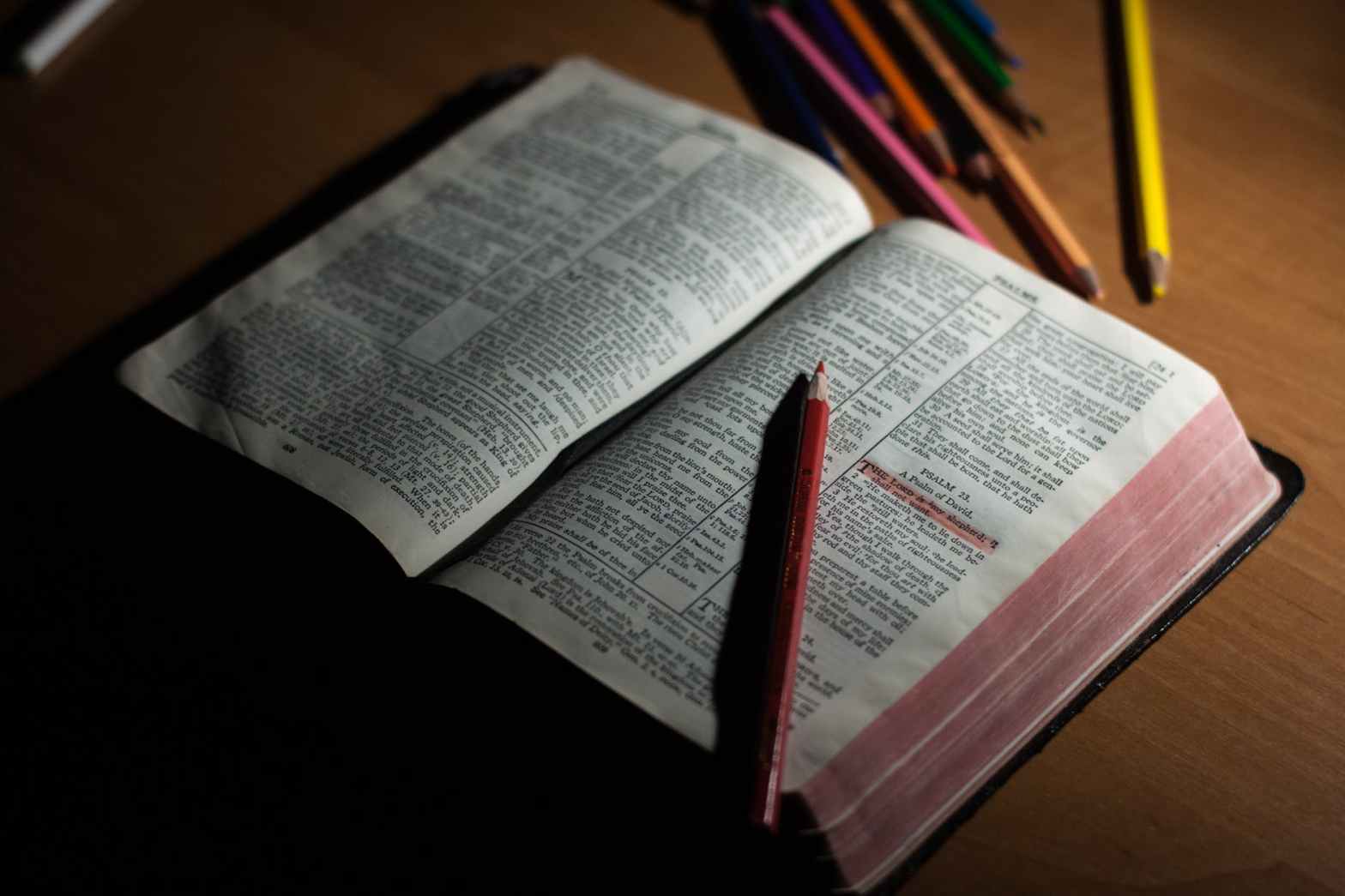
In college I had a semester long course dedicated to teaching how to study and interpret the Bible. It even had a fancy name: Hermeneutics.  We were assigned difficult passages in the Old and New Testament to write papers on, explaining the text. I spent hours poring over commentaries in the eerily quiet library. I didn’t realize how privileged I was to benefit from hundreds of years of Christian teaching and tradition in those musty volumes.

Several years later, I found myself in a very different context. I lived in a country that didn’t even sell Bibles in bookstores. I couldn’t bring any of my books with me. Suddenly my Bible sat alone on the shelf. I’d relied so long on the plethora of spiritual resources that when they were taken away, I was faced with this all important question: how do I study the Bible? How do I dig in and mine the truths from the Word, understand it, treasure it, and apply it on a daily basis?

Dear friends taught me the Three Questions method of Bible study that can be done in a group or in personal study. It can be used by people who became believers this morning or those who’ve walked with Jesus for fifty years. It is simple, easy to remember, and effective.

Gold and Honey

First, take a moment to ask the Holy Spirit to reveal truth to you. Apart from the Spirit, we are dead to the Word of God (1 Cor. 2:12). Submit yourself to God and in humility ask for understanding.

Next, the text must be read. The law, testimony, and decrees of the Lord are to be more desired than fine gold, and it is sweeter than honey (Ps. 19:10). We may be in different seasons, able to devote more or less time to study, but no matter what’s going on, don’t forsake the Book. Read it. Treasure it. Meditate on it! Devotional books and apps are helpful, but Scripture must be the center of our study. Read it in your heart language, the language you think in. If the Bible hasn’t been translated into your heart language, read it in a language you understand, then write down a paraphrase of the verses you’re studying in your heart language.

It is helpful for me to write the scripture that I’m studying or meditating on. Writing helps me process the information better and it sticks with me longer. Do whatever helps you understand the Word. Read it, sing it, write it, listen to it. Abide!

3 Questions

Then we ask ourselves three questions about the text:

  1. What does this teach us about God?
  2. What does this teach us about Man?
  3. How does this change me? (application)

We must always start with God. We learn about his character, attributes works, and commandments. Next, we look at Mankind, people, ourselves. The text gives us godly examples to follow, foolish examples to avoid, and truths about our innermost workings. Lastly, we apply what we learn. The Word of God should change us. We shouldn’t read, close the Bible and walk away the same as before.

But be doers of the word, and not hearers only, deceiving yourselves. For if anyone is a hearer of the word and not a doer, he is like a man who looks intently at his natural face in a mirror. For he looks at himself and goes away and at once forgets what he was like. But the one who looks into the perfect law, the law of liberty, and perseveres, being no hearer who forgets but a doer who acts, he will be blessed in his doing. James 1:22-25

This is a great source of accountability as well. You can share your answers to question 3 with your community group and ask them to help you grow and apply these changes in your life. It is also a great encouragement to go back and see the evidence that he has changed you by the power of his Word and Spirit!

Example

Here’s an example from one of my quiet times this week. I find it helpful to write it all down, not only to help me process, but so that I can go back and remember what God taught me.

Oh, the depth of the riches and wisdom and knowledge of God! How unsearchable are his judgments and how inscrutable his ways! “For who has known the mind of the Lord, or who has been his counselor?” “Or who has given a gift to him that he might be repaid” For from him and through him and to him are all things. To him be glory forever. Amen. Romans 11:33-36

What does this teach me about God?

  • He has innumerable riches, wisdom, and knowledge.
  • His judgements are without error and his ways are unquestioningly good.
  • No one can fully know and understand God’s mind.
  • He needs no advisors or counselors.
  • God doesn’t owe anybody anything.
  • Everything is from him, through him, and for him.
  • He deserves glory forever.

What does this teach me about Man?

  • Man’s wisdom, knowledge, and riches are finite and limited.
  • We shouldn’t second guess God’s plan for us. His ways are good and unsearchable.
  • We are not God’s counselor or advisor through prayer or otherwise.
  • God doesn’t owe Mankind anything but hellfire because of sin.
  • We must give glory to God because he is everything.

How does this change me?

  • I have a thankful heart.
  • I can rest in his wisdom and sovereignty.
  • I repent of my pride, that I think God owes me.
  • Glorify God!

I pray this is helpful for you as you walk with God! This is not the only or best way to study the Bible, but it is a method that may spur you on in your study and application of God’ s Word. My prayer for each of you reading is that God will bless you with rich, sweet times with him as you abide in him and feast on the beautiful word of God.

James 1:22-24